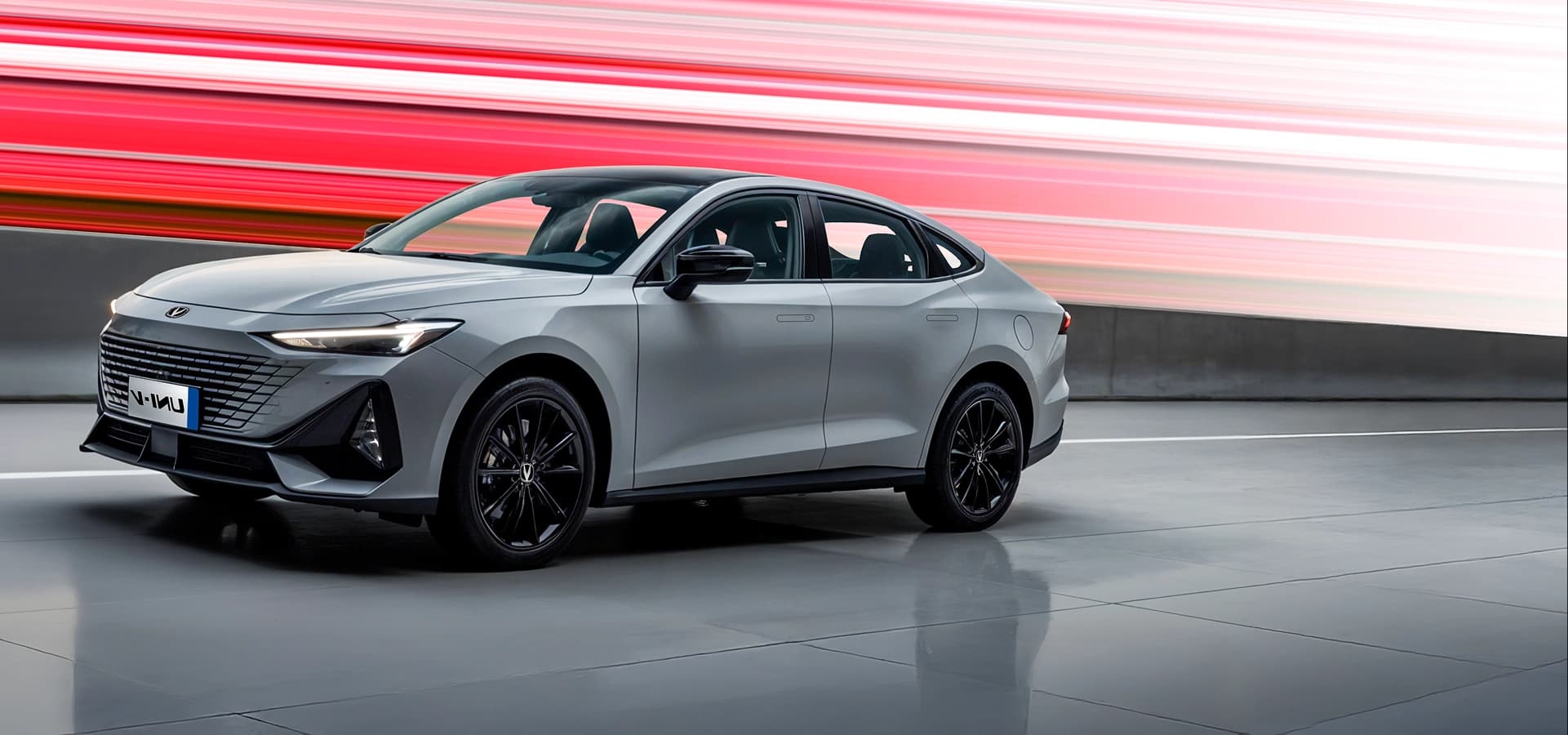
Ro-Ro wins at one or two units; a 40HQ container wins from three UNI-V or two UNI-T, and it wins at any volume into Lagos regardless of arithmetic because of pilferage. We quote both on every proforma invoice so the comparison is in front of you before you commit.
The per-unit numbers
| Mode | Units | Freight total | Per unit |
|---|---|---|---|
| Ro-Ro | 1 x UNI-V | USD 1,250 | USD 1,250 |
| Ro-Ro | 3 x UNI-V | USD 3,750 | USD 1,250 |
| 40HQ container | 3 x UNI-V | USD 3,400 | USD 1,133 |
| 40HQ container | 2 x UNI-T | USD 3,400 | USD 1,700 |
| Ro-Ro | 2 x UNI-T | USD 2,900 | USD 1,450 |
The UNI-T is the taller car at 1,565 mm, so only two fit a 40HQ against three UNI-V. That single dimension flips the answer: containerising UNI-V sedans saves money from three units, containerising UNI-T SUVs costs money at every volume and you do it for protection, not price.
What Ro-Ro actually costs you beyond the freight line
- Vehicles are driven on and off by terminal staff, so expect 30 to 80 km on the odometer at delivery and occasional kerbed alloys.
- Cars sit on an open deck with other traffic. Minor paint and trim damage is common enough that all-risks marine cover is not optional.
- Loose items — floor mats, tool kits, first-aid boxes, sometimes badges — go missing at several West African terminals. Container shipments do not have this problem.
- Some Ro-Ro operators surcharge or refuse plug-in hybrids outright because of the traction battery. The UNI-V iDD is effectively container-only into most West African ports.
Before the vessel books: SONCAP
Nigeria requires a SONCAP Product Certificate before a Form M is cleared, and the underlying inspection happens in China before loading. Ghana runs an equivalent Conformity Assessment scheme. Neither can be retrofitted after departure, and getting it wrong means the vehicle sits on demurrage while you argue.
“SONCAP is a mandatory conformity assessment programme for regulated products imported into Nigeria, with certification issued prior to shipment.”