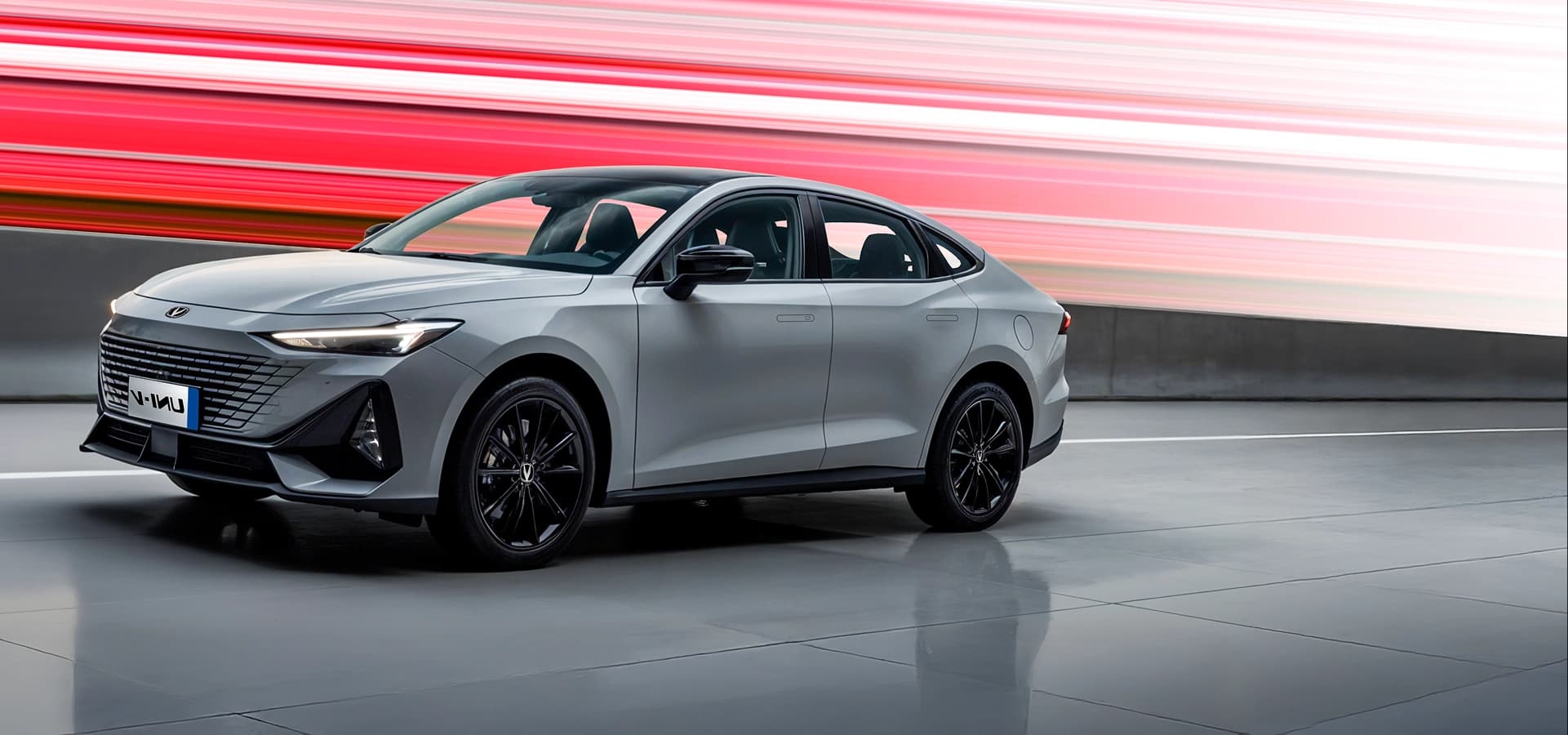
On a typical FOB premium, the UNI-V iDD pays itself back in roughly 90,000 to 130,000 km of urban ride-hailing — but only where petrol is above about USD 1.20 a litre and drivers reliably charge overnight. Where either condition fails, buy the 1.5T and stop reading. Ask us for both quotations and run the arithmetic below against your own numbers.
The inputs
| UNI-V 1.5T | UNI-V iDD (charged) | UNI-V iDD (depleted) | |
|---|---|---|---|
| Consumption | 6.1 L/100 km | ~14 kWh/100 km electric | ~5.0 L/100 km |
| Unit price assumed | USD 1.20 / litre | USD 0.09 / kWh | USD 1.20 / litre |
| Energy cost per 100 km | USD 7.32 | USD 1.26 | USD 6.00 |
At those numbers a fully-charged iDD saves USD 6.06 per 100 km. Over the 136 km CLTC electric range it is a USD 8.24 saving per full charge cycle. A ride-hailing driver covering 200 km a day, charging once overnight, saves roughly USD 8 a day, or about USD 2,400 a year on a six-day week.
Why CLTC range is not the number to plan with
CLTC is China light-duty vehicle test cycle, and it is the most optimistic of the three common cycles — noticeably more generous than WLTP and far more generous than the US EPA cycle. Plan on roughly 100 to 110 km of real urban electric range from the 136 km CLTC figure, less again with air conditioning running hard in a Gulf or West African summer.
“The WLTP test procedure was developed to provide a more realistic basis for comparing fuel consumption and emissions figures than earlier cycles.”
The two cases where the iDD never pays back
- Subsidised petrol. In markets where pump prices sit below roughly USD 0.60 a litre, the energy saving collapses to under USD 3 per 100 km and the payback runs past 250,000 km — beyond the fleet replacement cycle.
- No overnight charging. A driver who never plugs in runs the iDD permanently in depleted mode at about 5.0 L/100 km, saves 1.1 L/100 km over the 1.5T, and has paid a substantial premium plus 250 kg of extra kerb weight for it. This is the single most common way fleets waste money on plug-in hybrids.
What tips the decision the other way
Import duty. Several ASEAN and Latin American markets treat a plug-in hybrid as a new-energy vehicle and apply a materially lower duty and excise rate than to a petrol car. Where that relief exists, the iDD can land cheaper than the 1.5T despite the higher FOB, and the fuel saving becomes pure upside. Tell us the destination and we will check the current classification before you commit.